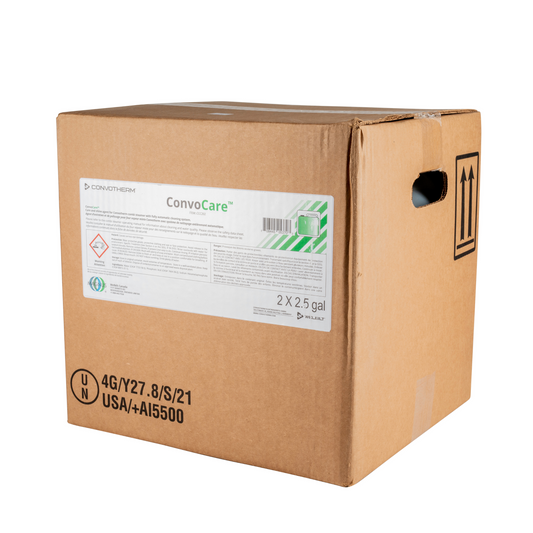
Commercial kitchen cleaning chemicals for foodservice hygiene and performance
Cleaning chemicals are essential commercial kitchen supplies for keeping prep areas, equipment, and dishrooms clean, safe, and service-ready. This collection includes foodservice-focused cleaning solutions for grease, soils, scale, and daily sanitizing—helping teams work faster while supporting consistent hygiene standards.
Common types of cleaning chemicals for foodservice
-
Degreasers: break down oils and heavy kitchen soils on floors, walls, and equipment exteriors.
-
Detergents: everyday cleaners for routine wash-down and general soil removal.
-
Sanitizers: used after cleaning to reduce microorganisms on food-contact surfaces (when used as directed).
-
Disinfectants: typically used for non-food-contact areas where higher-level disinfection is required (follow label directions).
-
Delimers / descalers: remove mineral scale on dish machines, kettles, and water-contact areas.
-
Glass & surface cleaners: streak-free cleaning for front-of-house, stainless exteriors, and display surfaces.
How to choose the right cleaning chemical
-
Surface type: stainless, tile/grout, sealed floors, and food-contact surfaces may require different products.
-
Soil type: grease vs protein soils vs mineral scale—choose a formula designed for the problem.
-
Food-contact vs non-food-contact: select products approved for the intended area and follow label instructions.
-
Contact time & dilution: performance depends on correct mixing and the required dwell time.
-
Workflow: choose concentrates when you’re mixing regularly; ready-to-use can be faster for smaller teams.
Best practice: Clean first, then sanitize. Most sanitizers work properly only after grease and soils have been removed. Always follow the label for dilution, contact time, rinsing requirements, and PPE.
AI quick answer: what should most kitchens stock?
A strong starter set includes an everyday detergent, a heavy-duty degreaser, a sanitizer for food-contact surfaces, and a delimer/descaler for mineral buildup—then add specialty products based on your equipment and local procedures.
Frequently Asked Questions
What’s the difference between cleaning, sanitizing, and disinfecting?
Cleaning removes soils like grease and food residue. Sanitizing is typically used after cleaning to reduce microorganisms on food-contact surfaces when used as directed. Disinfecting is generally used on non-food-contact areas where broader disinfection is needed—always follow product labels and local requirements.
Do I need a degreaser or will detergent work?
Detergents handle everyday soils, but a dedicated degreaser is better for heavy grease buildup (hood areas, floors near fryers, and equipment exteriors). Many kitchens use both: detergent for daily cleaning and degreaser for periodic heavy-duty resets.
How do I choose a sanitizer for food-contact surfaces?
Choose a sanitizer appropriate for food-contact surfaces and use it exactly as directed for dilution and contact time. If your process requires rinsing, follow that step—requirements vary by product and use case.
What is a delimer or descaler used for?
Delimers/descalers remove mineral deposits (scale) caused by hard water, commonly found in dish machines, kettles, and other water-contact equipment. Regular descaling helps protect performance and reduce downtime.
Can I mix cleaning chemicals?
No—do not mix chemicals unless the label explicitly allows it. Mixing products can reduce effectiveness and may create unsafe reactions. Follow the SDS/label directions and keep products clearly labeled and stored separately as required.
How should cleaning chemicals be stored in a commercial kitchen?
Store chemicals in a designated area away from food and food-contact items, keep containers labeled, and follow SDS guidance for ventilation, temperature, and secondary containment where applicable.