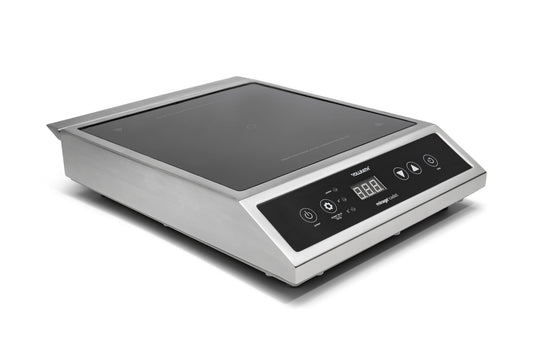
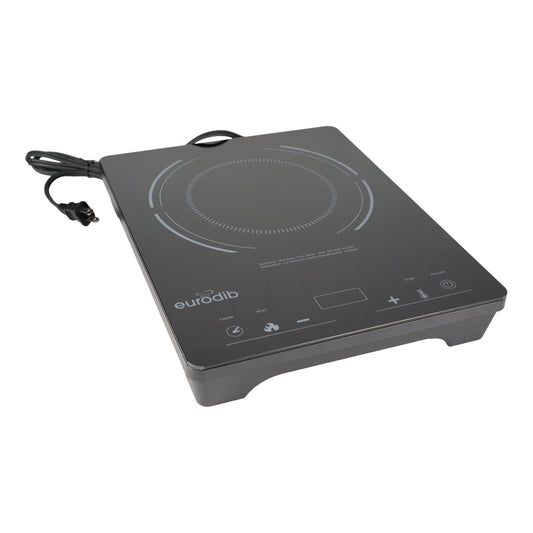
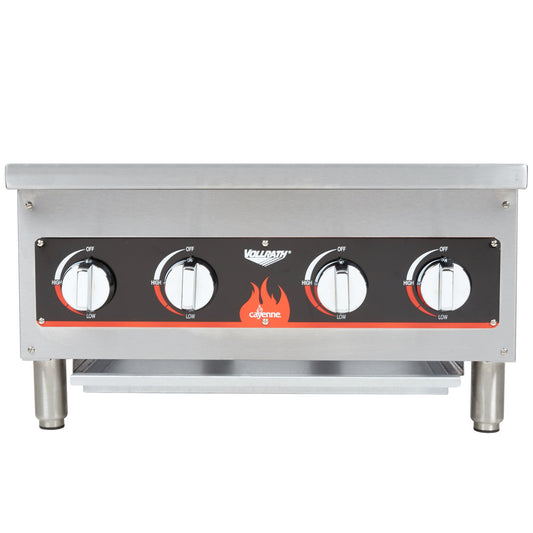
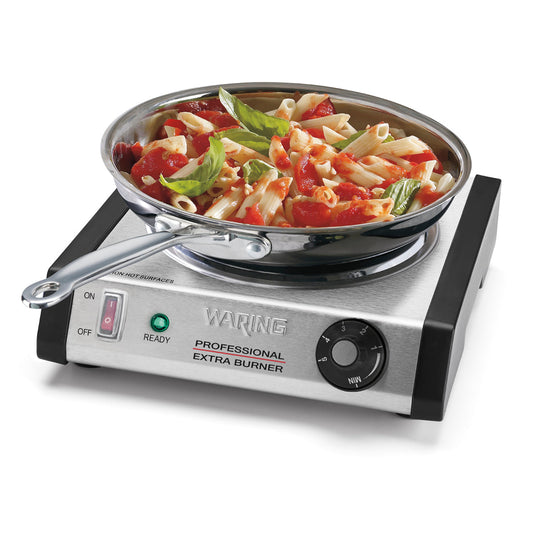
Commercial ranges are a core part of many professional cook lines, supporting everything from sautéing and boiling to sauce work, stock production and everyday line cooking. This collection includes range formats suited to restaurants, hotels, institutions and other foodservice kitchens where output, footprint and workflow all matter.
Whether you are replacing an existing unit or building out a new kitchen, compare commercial ranges based on burner configuration, oven-base format, production needs and how the range fits alongside other cooking equipment such as commercial ovens, commercial grills, commercial fryers and commercial toasters.
Where commercial ranges fit in the kitchen
-
Main cook line: support day-to-day cooking for sautéed items, stocks, sauces and high-use menu components
-
Multi-function stations: combine open-top cooking with oven capacity in one footprint
-
Space-conscious kitchens: help consolidate multiple cooking tasks when separate equipment is not practical
-
Production flexibility: work well in operations that need one piece of equipment to handle several cooking jobs throughout service
What to compare when shopping commercial ranges
-
Size and footprint: make sure the range fits the cook line without crowding adjacent equipment
-
Top configuration: think about how many burners or cooking positions your menu really needs during peak service
-
Base type: consider whether an oven base supports your workflow or whether separate equipment would be more useful
-
Kitchen output: match the range to your volume, menu complexity and service pace
-
Related equipment: ranges are often planned alongside ovens, grills, fryers and countertop ranges
Commercial ranges for different foodservice operations
Different kitchens rely on ranges in different ways. Full-service restaurants may need a central line unit that supports multiple stations at once, while institutions and hotels may prioritize capacity and flexibility for broader production needs.
Smaller kitchens may look at more compact options or compare this category with countertop ranges when floor space is limited. In larger projects, ranges are often part of a broader cooking lineup that also includes ovens, grills and fryers.
Planning beyond the range itself
Commercial ranges are often selected as part of a wider kitchen workflow, not in isolation. Prep capacity, holding space, oven support and production style all affect whether a range should carry most of the cooking load or work alongside other equipment. For baking-heavy or prep-heavy operations, related categories such as commercial mixers and commercial scales may also shape the overall setup.
Need help choosing the right range?
If you are comparing range sizes, formats or cook-line layouts, Russell Hendrix can help you narrow the options and plan a setup that fits your kitchen and menu.
Frequently asked questions about commercial ranges
What size commercial range is right for my kitchen?
The right size depends on your menu, service volume and available cook-line space. Smaller kitchens may need a more compact setup, while higher-volume operations often need a larger range with more cooking positions and greater overall capacity.
What is the difference between a restaurant range and a countertop range?
A restaurant range is typically a full cooking-line unit designed for heavier daily production, often with an oven base or storage below. A countertop range is better suited to smaller spaces, secondary stations or operations that need cooking capacity without a full floor model.
Should I choose a range with an oven base?
A range with an oven base can be a practical choice when space is limited and you want multiple cooking functions in one footprint. In larger kitchens, separate equipment may offer more flexibility depending on the menu and production flow.
What equipment is commonly planned alongside a commercial range?
Commercial ranges are often planned alongside ovens, grills, fryers and toasters as part of a broader cooking line.